
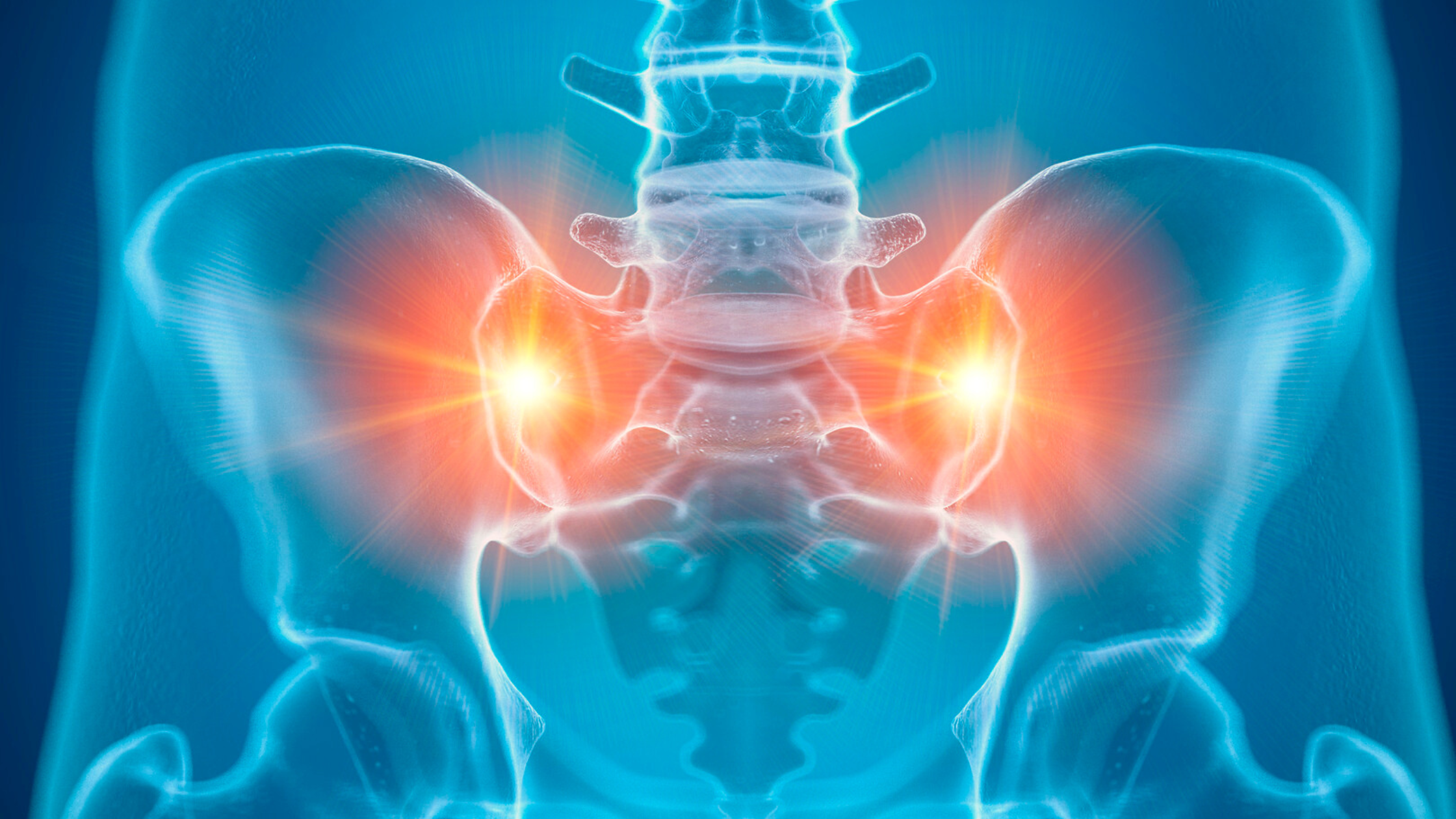
Lower back pain is often associated with the spine, but the spine is not always the source. The sacroiliac (SI) joint, which connects the lower spine to the pelvis, can also cause pain that feels similar to common spinal conditions.
Because SI joint pain can overlap with symptoms of lumbar disc problems, spinal stenosis, sciatica, and other conditions, identifying the source of pain is an important first step toward appropriate treatment.
What Is the Sacroiliac Joint?
The sacroiliac joint is the connection between the sacrum, the triangular bone at the base of the spine, and the pelvis. The SI joints are located on both sides of the lower back and help transfer forces between the upper body and legs.
The sacroiliac joint has relatively limited movement, but it plays an important role in stability during standing, walking, bending, and other everyday activities. Irritation, inflammation, injury, or changes in the joint can contribute to lower back, buttock, hip, or leg pain.
What Does Sacroiliac Joint Pain Feel Like?
Sacroiliac joint pain commonly causes discomfort in the lower back or buttock on one side. The pain may also extend into the hip, groin, thigh, or upper leg.
Unlike some forms of nerve-related spinal pain, SI joint pain does not necessarily follow a specific nerve pathway. Some people describe the pain as aching or deep, while others experience sharp discomfort with certain movements.
Because symptoms vary, the location and pattern of pain are only part of the diagnostic process.
Could One-Sided Lower Back or Buttock Pain Point to the SI Joint?
One-sided pain in the lower back or buttock can be a sign that the SI joint is involved. SI joint dysfunction frequently produces pain that is more noticeable on one side rather than directly in the center of the lower spine.
However, one-sided back pain does not automatically mean the SI joint is responsible. Conditions affecting spinal discs, facet joints, nerves, muscles, or the hip can produce similar symptoms.
For that reason, pain location should be considered alongside a physical examination and the patient’s complete medical history.
Does Pain With Standing, Walking, or Changing Positions Suggest SI Joint Problems?
Pain that becomes worse with prolonged standing or walking may occur with SI joint dysfunction. Some people also notice increased pain when climbing stairs, getting out of a car, turning in bed, or transitioning from sitting to standing.
These activities place stress on the pelvis and SI joint, potentially reproducing symptoms when the joint is irritated.
Pain that consistently changes with specific movements can provide useful information during an evaluation, although these patterns alone cannot establish an SI joint diagnosis.
Can SI Joint Pain Feel Like Sciatica?
SI joint pain can sometimes resemble sciatica because discomfort may extend from the lower back or buttock into the leg. This overlap can make it difficult to determine whether the pain originates in the SI joint or from a spinal nerve.
True nerve-related sciatica may involve symptoms such as shooting pain, numbness, tingling, or weakness that follow the distribution of an affected nerve. SI joint pain may produce referred pain into the leg without the same neurological pattern.
A medical evaluation can help distinguish SI joint pain from lumbar radiculopathy and other causes of leg symptoms.
What Is the Difference Between SI Joint Pain and Spinal Pain?
The difference between SI joint pain and spinal pain is not always obvious because several conditions can produce similar symptoms. Spinal conditions such as herniated discs, degenerative disc disease, facet joint arthritis, and spinal stenosis can all cause lower back pain.
SI joint pain is more closely associated with the joint connecting the pelvis and sacrum. Spinal pain, meanwhile, originates from structures within or around the vertebral column.
A careful examination may include specific SI joint provocative tests, neurological testing, assessment of the hip and spine, and a review of imaging when appropriate.
Can an SI Joint Injection Help Determine the Source of Pain?
An SI joint injection may sometimes be used as part of the diagnostic process when SI joint pain is suspected. During a diagnostic injection, medication is delivered into the joint under image guidance.
If temporarily numbing the joint significantly reduces the patient’s familiar pain, the response can provide additional evidence that the SI joint is contributing to symptoms.
Diagnostic injections are not appropriate for every patient and are generally considered alongside the physical examination and other diagnostic information.
What Causes Sacroiliac Joint Pain?
Sacroiliac joint pain can have several possible causes. Injury, repetitive stress, arthritis, changes in joint mechanics, pregnancy-related changes, and altered movement patterns may contribute to SI joint irritation.
Certain activities that repeatedly load the pelvis can also aggravate symptoms. In some cases, the cause is not immediately obvious.
Identifying contributing factors can help guide treatment and reduce unnecessary focus on the spine when the SI joint may be involved.
When Should Back Pain Be Evaluated?
Back pain should be evaluated when it persists, repeatedly returns, interferes with normal activities, or is accompanied by concerning symptoms. Severe or rapidly worsening pain, significant weakness, loss of bladder or bowel control, numbness in the groin area, fever, or other serious symptoms require prompt medical attention.
A pain specialist can evaluate whether symptoms are more consistent with the SI joint, lumbar spine, hip, or another source.
How Is Sacroiliac Joint Pain Treated?
Treatment for SI joint pain depends on the underlying cause, severity, and individual circumstances. Options may include physical therapy, activity modification, targeted medications when appropriate, image-guided injections, and other interventional pain treatments.
The goal is to identify the actual source of pain before selecting a treatment. When symptoms that appear to come from the lower back are actually related to the SI joint, an accurate diagnosis can help direct treatment toward the appropriate structure.
The Bottom Line
Back pain does not always originate in the spine. One-sided lower back or buttock pain, discomfort with certain movements, and symptoms that do not follow a typical nerve pattern may indicate that the sacroiliac joint is contributing to the problem. Because SI joint pain can closely resemble spinal conditions, professional evaluation is important for determining the source and developing an appropriate treatment plan.