
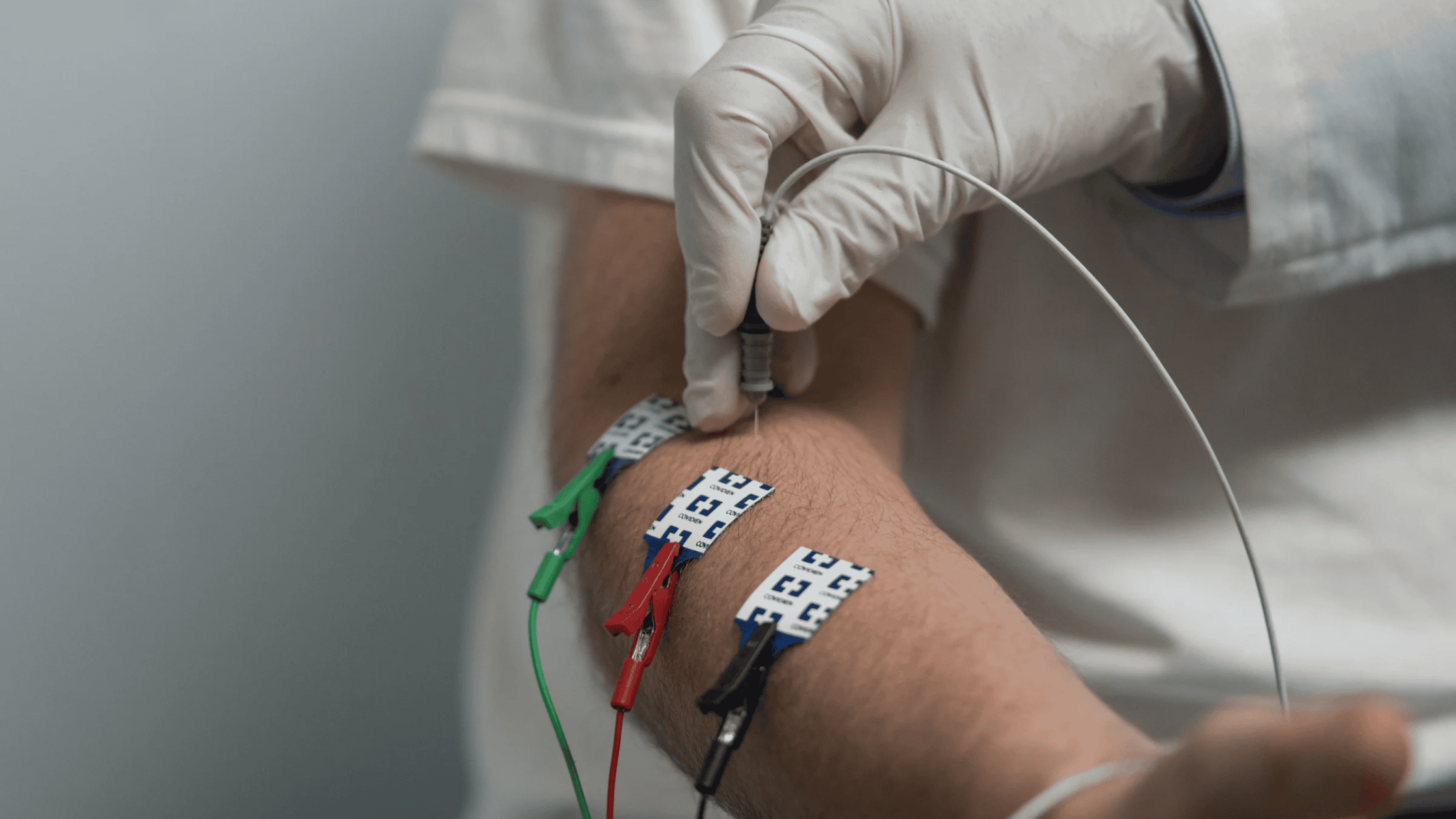
Electromyography, or EMG, is a test that evaluates how nerves and muscles are working. It is often paired with nerve conduction studies (NCS) to help determine whether symptoms such as tingling, numbness, weakness, or radiating pain come from a pinched nerve in the spine, an entrapment elsewhere in the limb, a generalized nerve disease, or a muscle problem. The results can help guide treatment decisions and avoid unnecessary procedures.
Why Nerve Pain Can Be Hard to Pinpoint
Nerves travel long distances from the spinal cord to the hands and feet, and they can be irritated at many points along the way. Pain in the arm may come from the neck, the shoulder, the elbow, or the wrist. Leg pain may originate in the lower back, the hip, or the knee region. Symptoms alone often cannot reveal the exact location, and imaging shows structure but not how well a nerve is functioning.
What Is EMG?
EMG measures the electrical activity of muscles at rest and during contraction. A thin needle electrode is inserted into selected muscles, and the signals are displayed on a screen and through a speaker. Patterns of activity can show whether a muscle is receiving normal signals from its nerve, whether a nerve has been injured, and sometimes how long ago.
What Are Nerve Conduction Studies?
Nerve conduction studies are often done at the same appointment. Small electrodes are placed on the skin, and a brief mild electrical impulse stimulates a nerve. The test measures how fast and how strongly the signal travels. Slowed or weakened signals can point to nerve compression, injury to the insulating covering of the nerve, or damage to the nerve fibers themselves.
Conditions EMG Can Help Evaluate
- Radiculopathy, or pinched nerve roots in the neck or back
- Carpal tunnel syndrome and other entrapment neuropathies
- Peripheral neuropathy from diabetes or other causes
- Nerve injuries after trauma or surgery
- Muscle disorders and some neuromuscular conditions
What to Expect During the Test
The test typically takes 30 to 60 minutes, depending on how many nerves and muscles need to be studied. The nerve conduction portion feels like brief tingling or snapping sensations. The needle portion can be uncomfortable, similar to a small injection, and some muscle soreness afterward is common. The physician or specialist will explain each step and can pause if needed.
How to Prepare
Wear loose, comfortable clothing, and avoid lotions or oils on the skin the day of the test, since they can interfere with electrode contact. Keep your limbs warm, as cold skin can slow nerve signals and affect results. Tell your provider if you take blood thinners, have a pacemaker or implanted device, or have a bleeding disorder.
How Results Guide Treatment
Results help your physician decide whether an injection, physical therapy, bracing, medication, or surgery is likely to be helpful. For example, if EMG confirms nerve root irritation at a specific level, an epidural or nerve root injection can be targeted more accurately. If testing points to a wrist or elbow entrapment instead, treatment can focus there. Normal results do not mean pain is not real, since some small-fiber nerve problems are not detected by standard testing, but they help rule out certain causes.
Timing Matters
Some changes take one to several weeks after a nerve injury to appear on EMG, so your physician may recommend waiting before testing. If symptoms are new, discuss the best timing.
Understanding Your Results
Your physician or specialist will review which nerves and muscles were tested, whether signals were slowed, weakened, or showing signs of ongoing or past injury, and how the findings fit with your symptoms and imaging. Because nerves can recover over time, results provide a snapshot, and repeat testing may be recommended in some cases. Bring your questions and a list of symptoms to the results discussion.
Limits of the Test
EMG and nerve conduction studies assess larger nerve fibers and muscles. They may not detect problems involving small pain-carrying fibers, and they cannot show the cause of every symptom. Your care team will interpret the test alongside your history, examination, and imaging to reach a complete picture.
Frequently Asked Questions
Is EMG safe?
It is generally very safe, with minor soreness or bruising being the most common effects.
Do I need an MRI as well?
Often yes. EMG evaluates nerve function, while MRI shows structures. They complement each other.
Can I return to normal activity afterward?
Yes, in most cases right away.
Ready to talk with a specialist? Contact Precision Spine Care to schedule an evaluation and learn which options may be right for you.
This article is for educational purposes only and is not a substitute for professional medical advice, diagnosis, or treatment. Always talk with a qualified healthcare provider about your individual situation.