
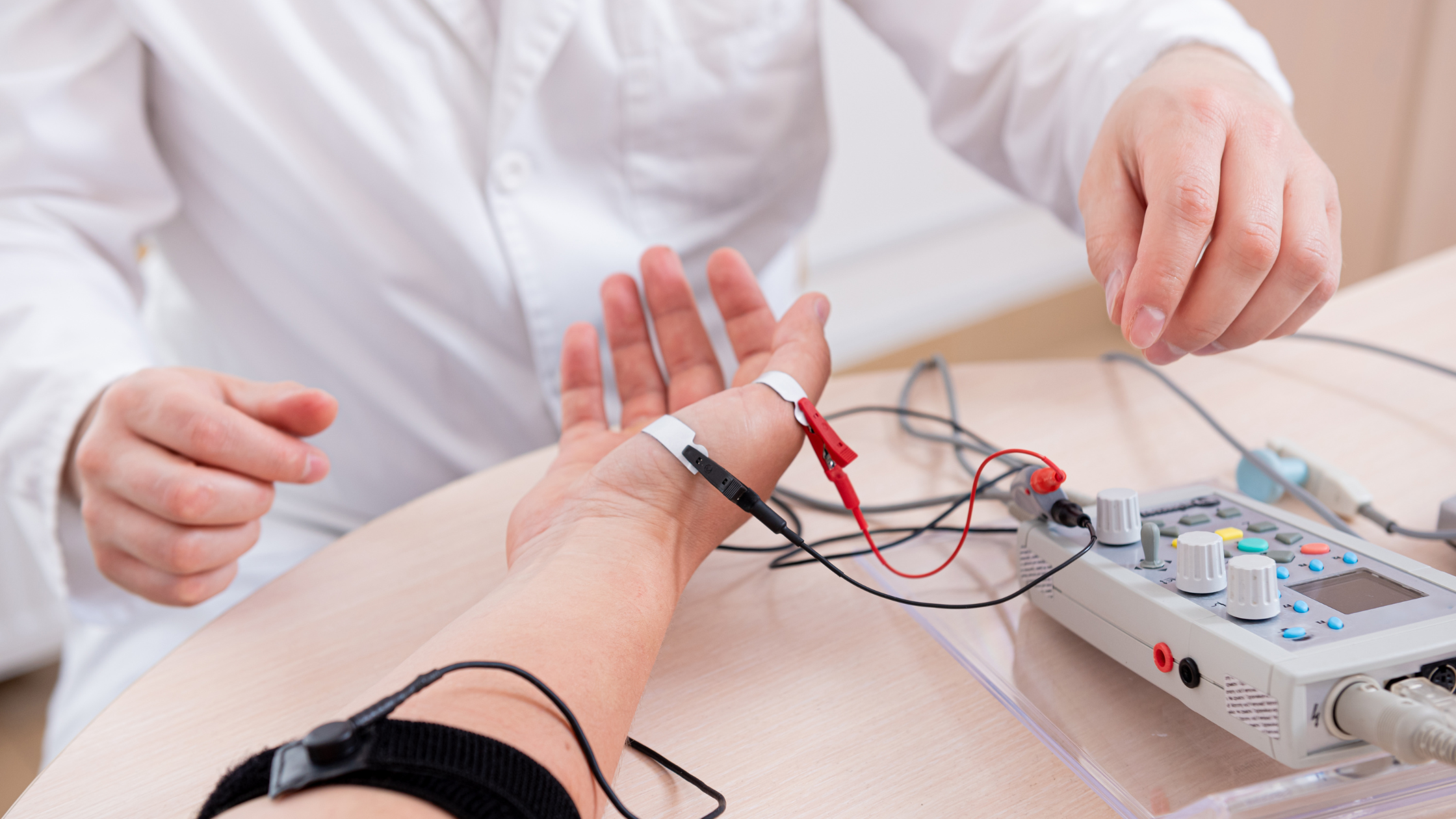
Numbness, tingling, burning sensations, and unexplained nerve pain can make everyday activities difficult. While these symptoms are common, they can result from many different conditions affecting the nerves, muscles, or spine. Determining the exact cause is the first step toward developing an effective treatment plan.
An electromyography (EMG) test is one of the most valuable diagnostic tools available for evaluating nerve and muscle function. Often performed alongside a nerve conduction study (NCS), an EMG provides detailed information about how well nerves communicate with muscles and whether damage is present.
Understanding what an EMG test can reveal helps patients better understand their symptoms and why accurate diagnosis is essential before beginning treatment.
What Is an EMG Test?
An EMG test is a diagnostic procedure that measures the electrical activity of muscles at rest and during movement. An EMG test evaluates whether muscles receive normal signals from the nerves that control them.
During the examination, a physician inserts very small, sterile needle electrodes into selected muscles. These electrodes record electrical activity, allowing the physician to identify abnormalities that may indicate nerve injury, muscle disease, or problems affecting communication between nerves and muscles.
An EMG is typically performed together with a nerve conduction study, which measures how quickly electrical signals travel through peripheral nerves. Together, these tests provide a comprehensive assessment of the neuromuscular system.
Why Might an EMG Be Recommended?
An EMG test may be recommended when numbness, tingling, weakness, muscle cramps, burning pain, or unexplained loss of muscle function cannot be fully explained through a physical examination or imaging studies alone.
Healthcare providers commonly order an EMG when patients experience:
- Persistent numbness or tingling
- Radiating pain into the arms or legs
- Muscle weakness
- Burning or shooting nerve pain
- Muscle twitching
- Difficulty walking
- Loss of coordination
- Suspected nerve compression
The goal is to identify whether symptoms originate from the nerves, muscles, spinal nerve roots, or another neurological condition.
What Conditions Can an EMG Diagnose?
An EMG test can diagnose or help confirm numerous conditions affecting the nervous and muscular systems.
Pinched Nerves
An EMG test can detect nerve root compression caused by herniated discs, spinal stenosis, or degenerative spine conditions. These problems often produce pain, numbness, or weakness that radiates into the arms or legs.
Peripheral Neuropathy
Peripheral neuropathy occurs when nerves outside the brain and spinal cord become damaged. Diabetes is one of the leading causes, although infections, autoimmune diseases, chemotherapy, and vitamin deficiencies may also contribute. An EMG helps determine the severity and distribution of nerve damage.
Carpal Tunnel Syndrome
Compression of the median nerve at the wrist often causes numbness and tingling in the thumb, index, middle finger, and part of the ring finger. EMG testing helps confirm the diagnosis and determine how severe the compression has become.
Cubital Tunnel Syndrome
Compression of the ulnar nerve at the elbow may cause numbness in the ring and little fingers along with weakness in hand muscles. EMG testing can identify the location and severity of nerve involvement.
Radiculopathy
Cervical or lumbar radiculopathy occurs when spinal nerves become compressed as they exit the spine. EMG testing helps distinguish radiculopathy from other nerve disorders affecting the arms or legs.
Muscle Disorders
Although many patients associate EMGs with nerve problems, the test also identifies certain muscle diseases, including inflammatory muscle disorders and muscular dystrophies.
How Does an EMG Help Explain Numbness and Tingling?
An EMG test helps explain numbness and tingling by identifying where nerve signals become disrupted. It can determine whether symptoms originate from the spine, peripheral nerves, or muscles.
For example, numbness in the hand could result from carpal tunnel syndrome, cervical radiculopathy, or peripheral neuropathy. While these conditions may produce similar symptoms, they require different treatment approaches.
Can an EMG Show the Difference Between Nerve Pain and Muscle Pain?
An EMG test can often distinguish nerve-related pain from muscle-related pain because it evaluates both systems independently.
Nerve pain typically produces burning, shooting pain, numbness, tingling, or electrical sensations. Muscle pain often causes aching, stiffness, tenderness, or weakness without abnormal nerve conduction.
What Happens During an EMG Test?
An EMG appointment usually lasts between 30 and 90 minutes, depending on the number of muscles and nerves being evaluated.
The examination generally includes two parts:
- Nerve Conduction Study (NCS): Surface electrodes measure how quickly electrical signals travel through the nerves.
- Electromyography (EMG): Thin needle electrodes measure electrical activity within selected muscles.
Patients may experience mild discomfort during portions of the examination, but most tolerate the procedure well without sedation.
Is an EMG Test Safe?
An EMG test is considered very safe and carries minimal risk. Temporary soreness at needle insertion sites usually resolves within one or two days. Serious complications are uncommon.
How Does EMG Testing Improve Treatment Planning?
An EMG test improves treatment planning by identifying the specific nerves or muscles involved and measuring the extent of dysfunction.
Treatment recommendations may include:
- Physical therapy
- Activity modification
- Anti-inflammatory treatments
- Image-guided injections
- Regenerative medicine therapies when appropriate
- Surgical referral for significant nerve compression
When Should Someone Consider an EMG Test?
An EMG test should be considered when numbness, tingling, weakness, or nerve pain persists despite conservative treatment or interferes with daily activities.
- Progressive muscle weakness
- Persistent numbness
- Burning nerve pain
- Symptoms affecting both hands or feet
- Difficulty gripping objects
- Balance problems
- Radiating arm or leg pain
- Muscle wasting
Why Is EMG an Important Part of Diagnosing Nerve Pain?
An EMG test is an important part of diagnosing nerve pain because it provides objective information that cannot always be obtained through MRI, X-rays, or physical examination alone. Imaging studies may show structural abnormalities, but an EMG reveals whether those abnormalities are actually affecting nerve function.
When combined with a detailed medical history, physical examination, and diagnostic imaging, EMG tests give physicians a clearer understanding of the cause of numbness, tingling, weakness, and chronic nerve pain. That precision leads to more personalized treatment recommendations and better long-term outcomes.